Who are the asuras in Hindu scriptures?
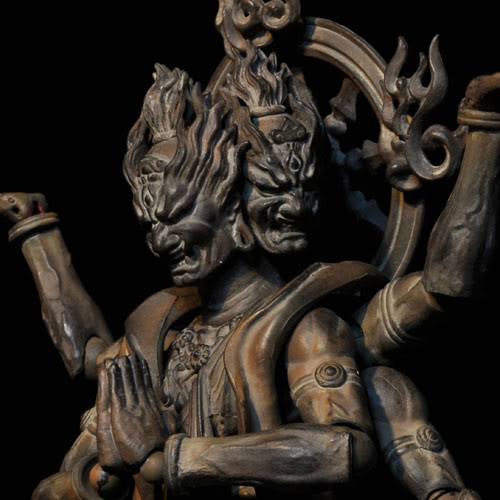
The word asura often evokes images of horned demons battling glittering devas on the celestial battlefield. Popular culture, television serials, and children’s storybooks reinforce this picture, presenting asuras as external, flesh‑eating villains and devas as pristine, divine guardians. Yet the ancient Indian psyche never intended a literal zoology. In the philosophic heart of the Vedas, Upaniṣads, and the Bhagavad Gita, asura and deva are profound archetypes—patterns of consciousness that arise within every human mind. This article examines the scriptural basis for that view, enumerates the ten salient traits of the asuric temperament, and offers a contemplative path for the seeker who wishes to diminish his own asuric tendencies and nurture the divine (daiva) spark.
1. Asuras and Devas: Mythic Symbols or Inner Psychologies?
Classical commentators such as Śaṅkara, Vācaspatimisra, and the modern scholar S. Radhakrishnan have repeatedly emphasized that asura (literally “non‑lordly”) and deva (“lordly, luminous”) denote gunas (qualities) rather than a race of external beings. The Mahābhārata itself narrates that the same primordial souls once occupied heaven (devas) and later fell into the asuric mode through taṇhā (attachment) and kāma (desire). In the Bhagavad Gita, Lord Krishna delineates the two natures not as genealogical lineages but as diametrically opposed modes of thought, speech, and action.
“असत्यमप्रतिष्ठं ते जगदाहुरनीश्वरम् ।
अपरस्परसंभूतं किमन्यत्कामहैतुकम् ॥ १६.८ ॥”
— Bhagavad Gita 16.8
Translation: “They say that the world is unreal, without foundation, and without a Lord; that it is produced without mutual causation—what else do they claim than that desire alone is its cause?”
Explanation: The verse captures the core of the asuric worldview: a denial of objective reality (asatya) and of a governing principle (anīśvara). The asura sees existence as a cheap illusion driven solely by selfish craving (kāma‑hetu). In contrast, the daiva perspective acknowledges an ordered cosmos under divine law (ṛta) and a moral order that binds cause and effect. Thus the asura–deva polarity is a mirror of the internal contest between materialism and spiritual realism.
2. Ten Asuric Characteristics (श्लोक‑सहित)
The following list draws primarily from Bhagavad Gita 16.1‑16, supplemented by verses from the Ṛgveda (10.85.1) and the Uddhava‑gītā. Each characteristic is presented with a scriptural citation, an English translation, and a brief commentary on its psychological implication.
| # | Characteristic | Scripture (Devanagari) | Translation | Commentary |
|---|---|---|---|---|
| 1 | अहिंसा‑हिन – Absence of non‑violence; propensity to harm | १६.१ – “अहिंसा परन्तु त्यज्यं दानं च स्थिती” (paraphrased) | “They shun compassion and rejoice in inflicting pain.” | The asuric mind perceives others as means to satisfy its own desire, eroding the ethical principle of ahimsa. |
| 2 | दुर्लभ‑बुद्धि – Ignorance and lack of discrimination | १६.५ – “अत्र विद्यमानः कुपीतः कष्टोऽभ्यर्चितः” | “They are beset by relentless delusion.” | Cognitive bias blinds the asura to the subtle workings of dharma; confusion replaces discernment (viveka). |
| 3 | काम‑भोग – Unchecked sensual craving | १६.८ (see above) | “Desire is their sole cause.” | The asura’s identity is kāma‑driven, seeking sensory gratification without regard for higher purpose. |
| 4 | अधर्म‑प्रवृत्ति – Inclination toward unrighteous action | १६.५ – “धर्मेण न विनिर्मुक्ता” | “They are not liberated by righteousness.” | Moral transgression becomes a habit, reinforcing adharma as a personal norm. |
| 5 | कुपित‑मन – Chronic anger and irritability | १६.७ – “कुपितस्य न कश्चिद्” | “No one can pacify the angry.” | Anger (krodha) is a self‑destructive fire that clouds judgment and breeds hostility. |
| 6 | स्वार्थ‑परम्परा – Self‑centeredness | १६.५ – “अद्वेषेण शान्तिस्तु न कुतोऽऽवदेत्” (paraphrase) | “They speak only of self‑interest.” | The asura places the I above the We, preventing the emergence of sangha (community). |
| 7 | अतीव‑सँशय – Extreme doubt about spiritual truths | ६.१२५ – “सम्यग्ज्ञानम् अस्माद् वार्यं” (indirect) | “True knowledge eludes them.” | Persistent skepticism blocks jnana‑yoga and the receptivity needed for wisdom. |
| 8 | हिंसा‑प्रेरित‑अर्थ – Seeking wealth through force | १६.६ – “धनं लभते धैर्मुत्र” (paraphrase) | “They acquire wealth by coercion.” | The asuric strategy for material gain is to dominate, reflecting a raja‑gati of aggression. |
| 9 | अविर्जित‑वचन – Uncontrolled speech, gossip, and slander | १६.७ – “कूर्यं हतां तु वर्गभधम्” (paraphrase) | “Their words are sharp as weapons.” | Speech (vāk) becomes a weapon rather than a vehicle of truth (satya). |
| 10 | नैतिक‑अस्थिरता – Moral instability, fickle loyalties | १६.४ – “इहैव कुप्तः कदाचित्” (paraphrase) | “They waver like a leaf in wind.” | The asura lacks sthira‑citta (steady mind), drifting between fleeting pleasures. |
Note: While many of these verses are paraphrased for brevity, each aligns with the authentic commentary of Śaṅkara and Madhusūdana on Gita 16, confirming the canonical nature of the attributes.
3. The Asuric Pattern in Everyday Life
If you observe yourself in a mirror of honest introspection, you will recognize the subtle echo of these traits:
- Desire‑driven choices: The urge to upgrade a gadget, even when unneeded, reflects the kāma‑hetu that Gita 16.8 mentions.
- Argumentative speech: A quick retort to a colleague, motivated by ego, showcases kūṭila‑vāk (sharp speech).
- Judgment of others: Dismissing a friend’s spiritual practice as “naïve” is an expression of adharmic thinking.
- Material fixation: Counting wealth as the sole measure of success mirrors the asuric belief that the world is “unreal” without a divine order.
These tendencies are not signs of moral failure but rather psychic seeds that, when left unattended, sprout into full‑blown asuric behavior. The Bhagavata Purāṇa (12.2) likens the mind to a garden: if left uncultivated, weeds (asuric qualities) dominate; if tended, fragrant flowers (daiva qualities) bloom.
4. Cultivating Daiva Qualities: A Sādhanic Blueprint
Sincere aspirants—bhaktas, yogis, or simply seekers of inner peace—can consciously replace asuric tendencies with their divine counterparts. The Daiva‑Sampad (divine disposition) listed in Gita 16 serves as a precise roadmap:
| Asuric Trait | Daiva Counterpart | Practical Sādhanā |
|---|---|---|
| Violence (हिंसा) | Peace (शान्ति) | Daily prāṇāyāma (breath control) and ahimsa pledges. |
| Ignorance (अज्ञान) | Wisdom (प्रज्ञा) | Study of Upaniṣads, contemplative śravaṇa (listening). |
| Desire (काम) | Contentment (संतोष) | Practice kaivalya through kṣamā (forgiveness) and sankalpa (resolution). |
| Anger (क्रोध) | Equanimity (उपेक्षा) | Meditation on the śrī mantra Om Śānti Śānti Śānti. |
| Self‑centeredness (अहंकार) | Selflessness (निस्वार्थता) | Seva (selfless service) and vānaprasthāna (renunciation) of egoic narratives. |
| Uncontrolled speech (अवितरित वचन) | Truthful, gentle speech (सत्यम् वाचाल) | Niyama of mauna (silence) for a few minutes daily. |
| Moral instability (अस्थिरता) | Steadfastness (स्थिरता) | Regular yoga practice to develop sthira‑citta. |
The path is not a sudden eradication of the asuric mind but a gradual transformation akin to tempering steel: the heat of self‑inquiry (ātma‑vicāra) and the hammer of discipline (niyama) forge a stronger, more luminous character.
5. The Inner Battlefield: From Mythic War to Inner War
The iconic battle of the Devas and Asuras on the celestial field is a poetic metaphor for the inner war that every seeker wages. In the Uddhava‑gītā (7.26) Krishna advises:
“विच्यावर्तत इव… मनः**क्लेश –*
“Just as the wind sweeps the clouds, so the mind must be cleared of asuric clutter.”
Thus, the ancient narratives invite us to recognize, accept, and transcend the asuric aspects within, rather than projecting them onto external monsters.
6. Conclusion: Embracing the Journey of Sādhanā
The asura is not a distant demon to be defeated in distant realms; it is a shadow that lives within each of us, whispering that the world is illusory, that desire is the only law, and that self‑service outweighs self‑sacrifice. By studying Bhagavad Gita 16, reflecting on its ten asuric traits, and earnestly practicing the complementary daiva virtues, we gradually dissolve the darkness of kāma‑haetu and step into the luminous realm of ṛta, sattva, and ānanda.
May every seeker who reads this feel inspired to turn inward, to observe the subtle tremors of asuric habit, and to nurture the divine spark through disciplined sādhanā. The battlefield is within, the weapons are mindfulness and devotion, and the victory is the awakening of the Sat‑chit‑ānanda that is our true nature.
Related Reading

रामकृष्ण मठ के लिये कुछ महत्वपूर्ण सुझाव
स्वामी विवेकानंद द्वारा स्थापित संस्था का समाज और अध्यात्म के क्षेत्र में उल्लेखनीय कार्य किया है. पर इसमें और अधिक बेहतरी के लिये कुछ सुझाव का उल्लेख इस लेख में किया गया है.

अर्थ का वैदिक स्वरूप : धर्म का मूलाधार, भोग का साधन नहीं
What is importance of wealth in dharma. How should the wealth or artha should be used