Shadows in the Mirage - The Three Defects of Worldly Life
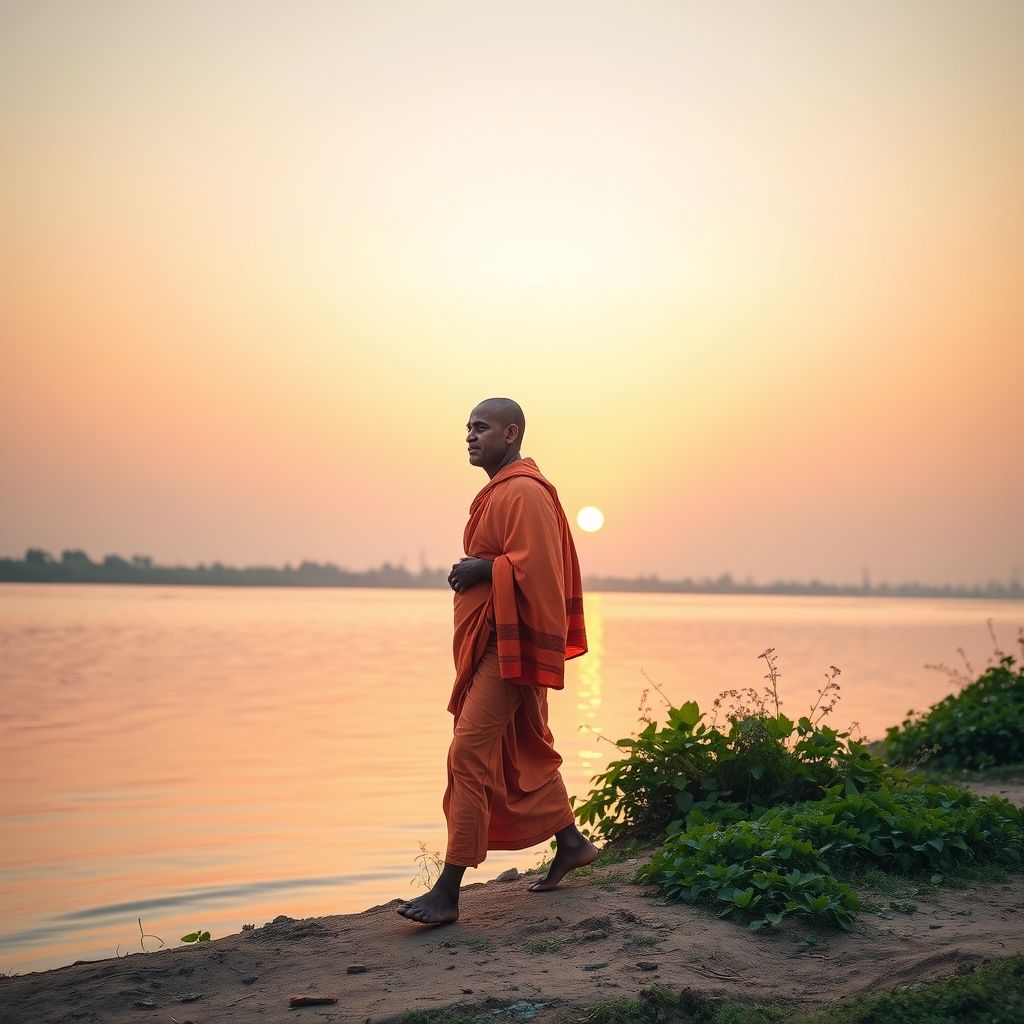
In the quiet depths of human consciousness, there plays a constant, underlying hum—a Tambūra Shruti of “I want”. From the dawn of childhood to the twilight of old age, humanity is driven by an unyielding pursuit of Sukham (happiness) and Abhayaṁ (security) within the material world. We gaze upon the glittering tapestry of worldly life (Samsāra) and believe that the accumulation of wealth, relationships, and status will finally quench our deepest thirsts. Yet, the great sage Bhartr̥hari, in his contemplative masterpiece the Vairāgya Śatakam, invites us to pause and look closer. Through the practice of Samsāra Dōṣa Darśanam—the objective observation of the defects inherent in worldly pursuits—he shatters the illusion of material permanence.
Bhartr̥hari does not deny that the world offers fleeting moments of joy. However, he warns that our perception is partial; we see the blossoming rose but ignore the thorns. With profound imagery and inward-looking wisdom, he outlines the three fundamental Dōṣas (defects) of worldly life: Atr̥pti (dissatisfaction), Kṣaṇikatvam (evanescence), and Bhayaṁ (fear).
1. Atr̥pti: The Unquenchable Thirst
The first profound defect of Samsāra is Atr̥pti, a deep-seated dissatisfaction that no amount of worldly acquisition can cure. The human tragedy is rooted in Apūrnatvam—a false sense of limitation and incompleteness born of spiritual ignorance (Ajnānam). To fill this inner vacuum, we turn outward, believing that finite objects can grant us infinite peace. However, finite additions to a finite being still leave one infinitely far from absolute completeness. Chasing material fulfillment is like walking toward the horizon; no matter how far or fast we run, the destination perpetually recedes.
Bhartr̥hari paints a vivid picture of a man in the twilight of his life, looking back at his relentless, exhausting struggles. Despite sacrificing his values, enduring insults, and roaming impenetrable lands, the hollow ache within remains untouched. He addresses his own craving (Tr̥ṣṇā) in a poignant verse:
भ्रान्तं देिमनेकरृगयद्ववषमं प्राप्तं न द्वकच्ञ्चत्फिम् त्यक्त्वा जाद्वतकुिाभभमानमुमचतं सेवा कृता द्वनष्फिा । भुकं्त मानद्वववर्जंतं परगृहेष्वािङ्कया काकवत् तृष्णे जृम्भशस पापकमयद्वपिुने नाद्याद्वप सन्तुष्यशस ॥ २॥
bhrāntaṁ dēśamanēkadurgaviṣamaṁ prāptaṁ na kiñcitphalam tyaktvā jātikulābhimānamucitaṁ sēvā kr̥tā niṣphalā | bhuktaṁ mānavivarjitaṁ paragr̥hēṣvāśaṅkayā kākavat tr̥ṣṇē jr̥mbhasi pāpakarmapiśunē nādyāpi santuṣyasi || 2||
“I have wandered through difficult, inaccessible mountainous terrains, yet gained no real fruit,” he laments. “I have cast aside the pride of my lineage, served the unworthy, and eaten like a frightened crow at the doors of strangers. O Desire (Tr̥ṣṇā), the instigator of all sins, you continue to expand within me; even now, you are not satisfied!”. Desire is like a fire (Analaha); the more fuel you feed it, the more fiercely it burns, expanding into a consuming conflagration.
2. Kṣaṇikatvam: The Fleeting Dance of Time
If the inability to find satisfaction were not enough, the objects we seek—and the very bodies we use to enjoy them—are plagued by Kṣaṇikatvam, the fleeting, evanescent nature of existence. Time (Kāla) is the ultimate devourer. In the grand theater of eternity, human life is but a transient spark. We live in a perpetual state of absence, so endlessly preoccupied with securing a fictional future that we fail to witness the present.
Before a person can even pause to enjoy the wealth they have sacrificed their youth to accumulate, they find themselves overtaken by Jarā (old age). The physical vessel, described beautifully as a leaking pot (bhinna ghaṭā) from which the waters of life continuously drain, loses its vitality. Bhartr̥hari captures this tragedy by comparing human life to a brief theatrical performance:
क्षणं बािो भूत्वा क्षणमद्वप युवा कामरशसकः क्षणं द्ववत्तैहीनः क्षणमद्वप च सम्पूणयद्ववभवः । जराजीणैरङ्गैनयट इव विीमच्ण्डततनुः नरः संसारान्ते द्वविद्वत यमधानीयवद्वनकाम् ॥ ५०॥
kṣaṇaṁ bālō bhūtvā kṣaṇamapi yuvā kāmarasikaḥ kṣaṇaṁ vittairhīnaḥ kṣaṇamapi ca sampūrṇavibhavaḥ | jarājīrṇairaṅgairnaṭa iva valīmaṇḍitatanuḥ naraḥ saṁsārāntē viśati yamadhānīyavanikām || 50||
“For a moment he is a child; for a moment, a youth chasing pleasures; for a moment, destitute, and for another, basking in complete prosperity. Finally, his limbs worn out by old age, his body decorated with wrinkles, man acts like a stage player (naṭa iva), swiftly exiting at the end of the drama into the green room of the Lord of Death (Yamadhānīyavanikām)”. The empires we build and the titles we claim are mere bubbles floating on the cosmic river of time, soon to be reduced to forgotten memories.
3. Bhayaṁ: The Shadow of Insecurity
The third existential defect is Bhayaṁ, the inescapable fear and insecurity that shadows every worldly joy. In Samsāra, every cause for pleasure (Sukha hetuḥ) is inherently intertwined with the potential for pain (Duḥkha hetuḥ). As long as our sense of self relies on external, physical forms, we remain desperately vulnerable. To possess is to fear loss.
When a person depends solely on the world rather than anchoring themselves in spiritual independence, the entire creation morphs into a source of anxiety. Every acquisition brings a corresponding terror, making the human heart a captive to circumstances outside its control. Bhartr̥hari systematically dissects this anatomy of fear:
भोगे रोगभयं कुिे च्युद्वतभयं द्ववत्ते नृपािाद्भयं माने दैन्यभयं बिे ररपुभयं रूपे जराया भयम् । िास्िे वाददभयं गुणे खिभयं काये कृतान्ताद्भयं सवं वस्तु भयान्न्वतं भुद्वव नृणां वैराग्यमेवाभयम् ॥ ३१॥
bhōgē rōgabhayaṁ kulē cyutibhayaṁ vittē nr̥pālādbhayaṁ mānē dainyabhayaṁ balē ripubhayaṁ rūpē jarāyā bhayaṁ | śāstrē vādibhayaṁ guṇē khalabhayaṁ kāyē kr̥tāntādbhayaṁ sarvaṁ vastu bhayānvitaṁ bhuvi nr̥ṇāṁ vairāgyamēvābhayaṁ || 31||
“In the enjoyment of worldly pleasures, there is the fear of disease (rōgabhayaṁ). In high lineage, the fear of falling from grace. In wealth, the fear of the king or taxes. In honor, the fear of humiliation (dainyabhayaṁ). In power, the fear of enemies. In beauty, the looming fear of old age (jarā). In scholarship, the fear of a rival debater. In virtue, the fear of wicked slanderers. And in the physical body (kāyē), the ultimate fear of Death (Krutāntaha)”.
Every facet of the material realm is laced with terror. What, then, is the sanctuary? Bhartr̥hari declares unequivocally: vairāgyamēvābhayaṁ—only in true dispassion and detachment (Vairāgyam) is there absolute fearlessness (Abhayaṁ).
The Dawn of Inner Freedom
Bhartr̥hari’s stark exposure of Atr̥pti, Kṣaṇikatvam, and Bhayaṁ is not meant to plunge us into dark pessimism or bitter cynicism. Rather, it is a compassionate, surgical strike against our spiritual blindness (Mōhaḥ). By magnifying the inherent flaws of material dependence, he forces us to look away from the transient and seek the eternal.
The ultimate cure for the Dōṣas of Samsāra is the dawn of Ātma Jnānam (Self-knowledge). True prosperity is redefined not by the vastness of one’s external empire, but by the depth of one’s internal contentment. When we cease demanding security from a fleeting world and discover the fullness (Pūrnatvam) already residing within our own consciousness, the mirage loses its power to deceive. We transform from anxious actors trapped on a vanishing stage into serene witnesses, abiding joyfully in the silent, fearless perfection of the Self.
Related Reading

मौन की यात्रा - जीवन सत्य और स्वतंत्रत
ौन के पवित्र आश्रय में सौंदर्य जीवंत हो उठता है। मौन के उस निर्मल सौंदर्य की वेदी पर विनम्रता जीवन के साथ सहजता से खेलती है। और जब विनम्रता में एक आंतरिक लय उत्पन्न होती है, तब उसके प्रकाश में निर्दोषिता स्वयं को प्रकट करने लगती है।

Finding the Universe Within - A Guide to Mindfulness, Letting Go, and True Joy
If the whole universe can be found in our own body and mind, this is where we need to make our inquiries. We all have the answers within ourselves—we just have not got in touch with them yet. The potential of finding the truth within requires faith in ourselves.
Sleep Analysis According to Advaita Vedanta
Delve into the mystical realms of sleep through the lens of Advaita Vedanta, exploring its states, the reality of dreams, and the ultimate transcendence in Turīya. This article navigates the traditional Indian philosophical perspective on sleep, grounded in seminal texts like the Mandukya Upanishad and the Bhagavad Gita.